May 2026/Product/professional

CalmPulse BP (Apple Watch)

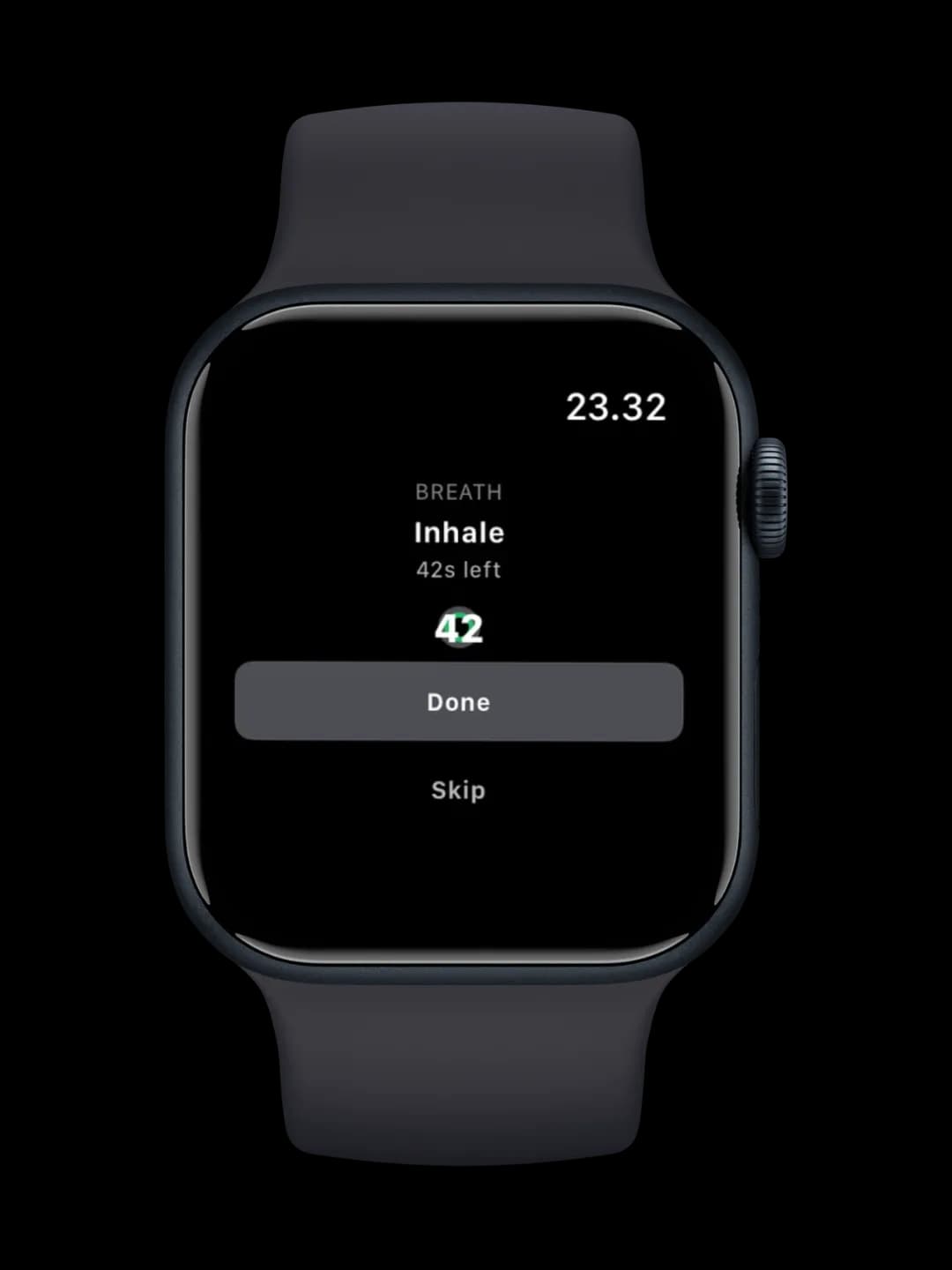
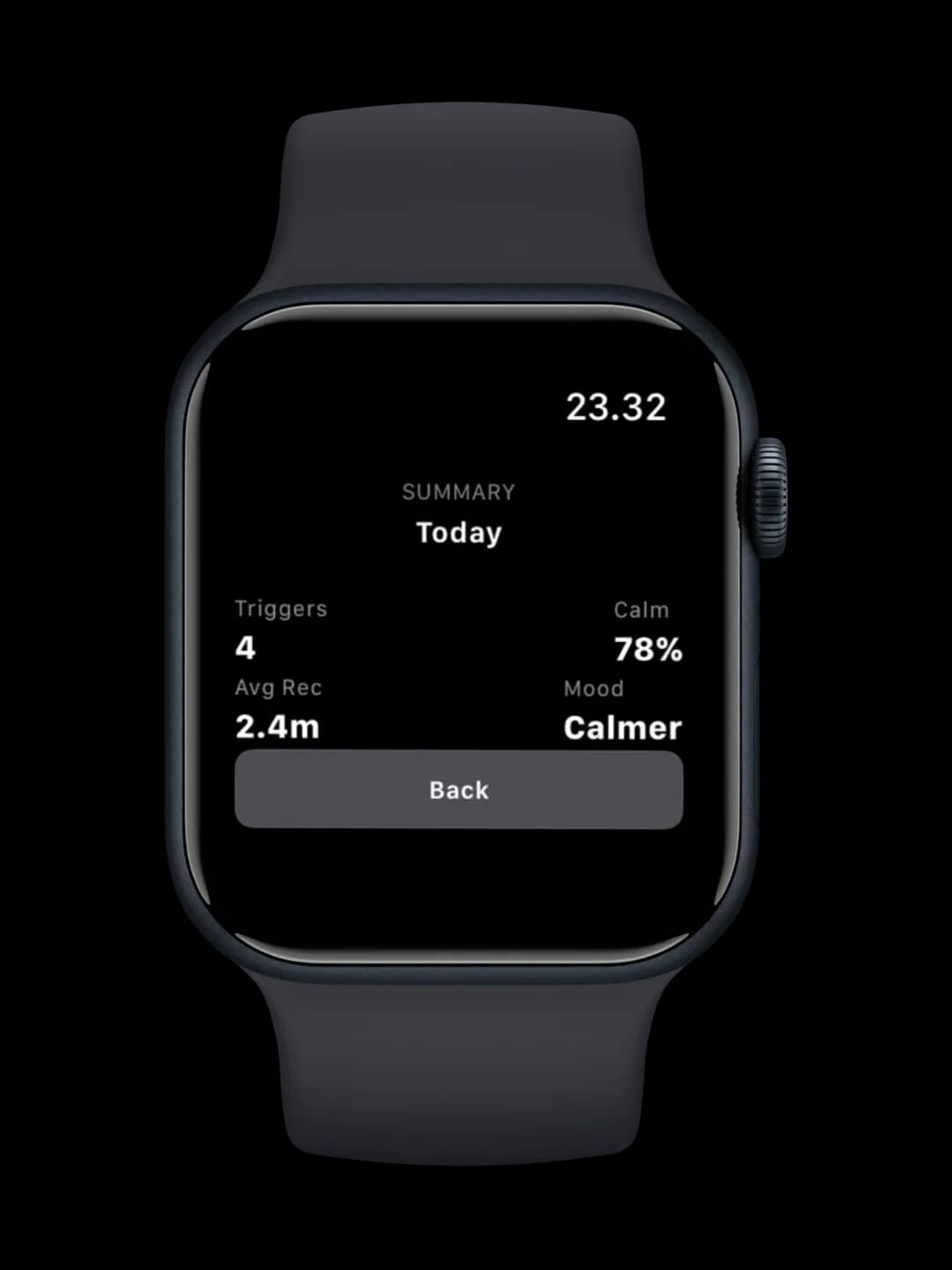
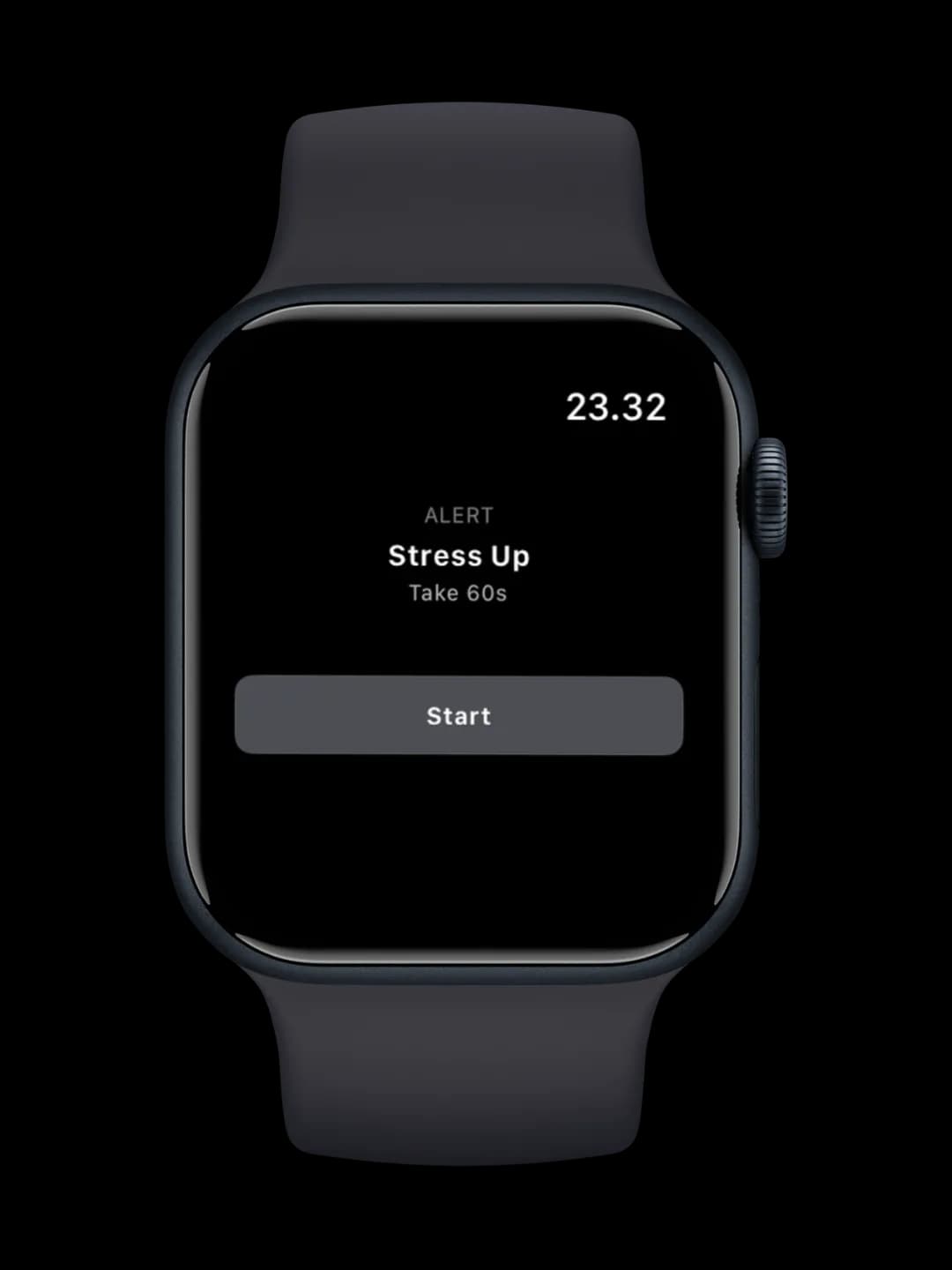
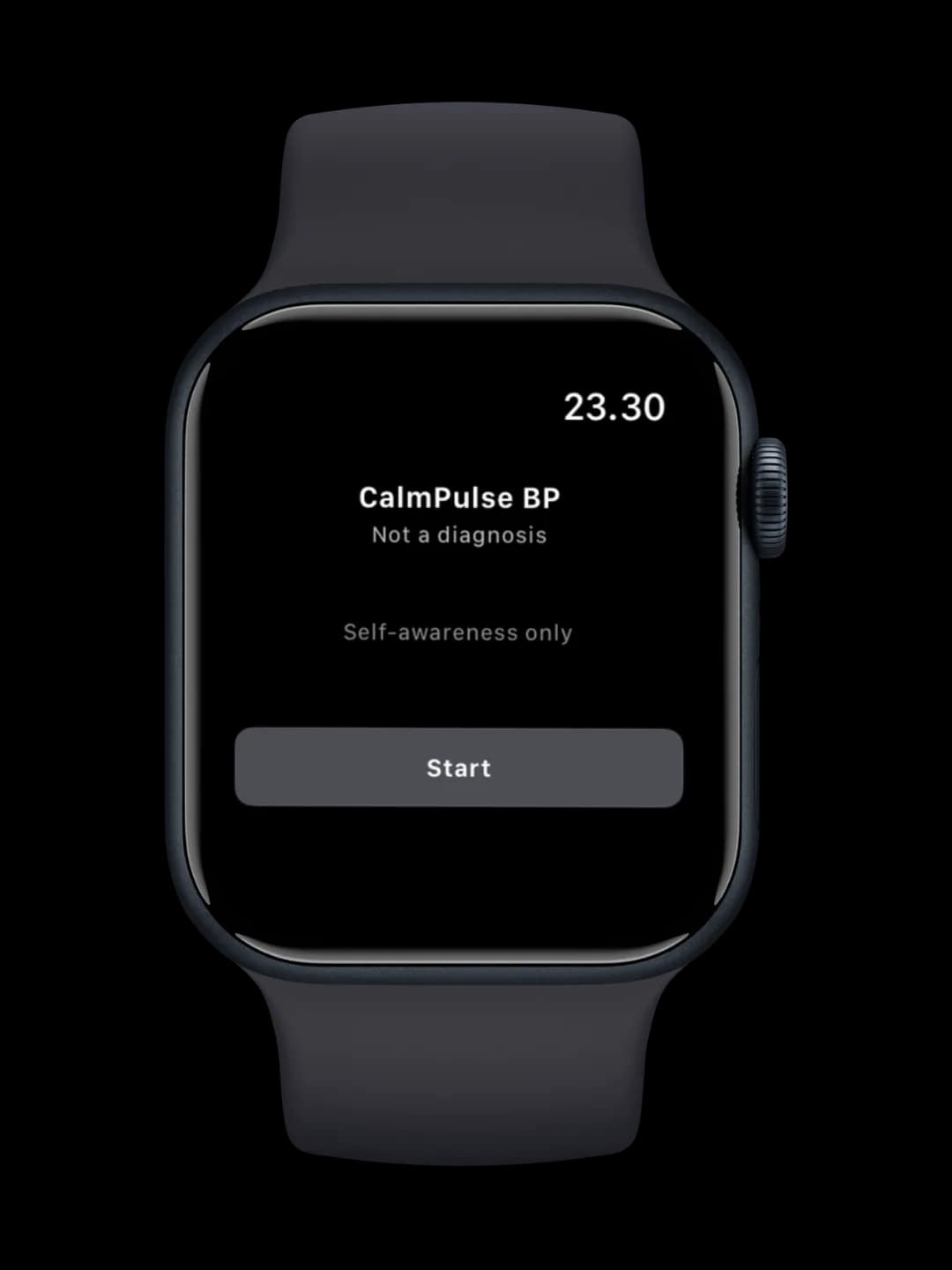
CalmPulse BP focuses on the practical intervention window before stress escalation peaks, turning that short moment into a repeatable sequence: notice, pause, breathe, and reflect.
project links
Domain
Product
Role
Product Builder for Wearable Behavior Support
Output
Wearable App
Category
watchOS Behavioral Health Companion
Project Framing

A source-backed case study built for recruiter review

This reading path makes the problem choice, evidence quality, user framing, execution decisions, and proof trail visible without overstating what the sources support.

Project Type
professional

watchOS-first behavioral support app for stress-aware micro-pauses, guided breathing, and post-session reflection for young adults with hypertension.

Orientation
Hybrid

Creates a conservative, non-clinical behavior-support baseline with clear safety boundaries and transparent MVP limitations.

Core Stack
SwiftUI · watchOS · Xcode · State Machine

watchOS SwiftUI application organized by state-driven flow (`Onboarding`, `Idle`, `Triggered`, `Breathing`, `Reflection`, `Summary`) with documented domain config and session-log model.

Why This Problem Mattered

Problem framing before execution

The case-study layer starts with why this problem was selected and how the context justified investment.

Problem Framing Map

Issue

Stress-support tools often miss the narrow window when users still have enough bandwidth to run a short intervention.

Context

The project is framed as a watch-first behavioral companion, intentionally separating self-regulation support from clinical diagnosis claims.

Why Selected

It demonstrates product systems thinking under safety constraints, including clear state logic and explicit trust boundaries.

Problem statement

Users often realize stress overload too late, when the best moment for short self-regulation intervention has already passed.

Solution thesis

Built a watch-first six-state flow with trigger prompts, guided breathing, quick reflection, and session-summary feedback.

Research and Evidence

What supports the narrative

Evidence is surfaced with its source type and credibility note so the recruiter can quickly see what is directly backed versus intentionally constrained.

Intervention framing evidence
public

README explicitly defines the `notice → pause → breathe → reflect` flow and stress-spike timing rationale.

Credibility: Directly traceable to project README and problem framing sections.
Open supporting public source
State logic evidence
public

State machine and PRD documents define six app states and runtime defaults.

Credibility: Backed by `docs/STATE_MACHINE.md` and `docs/PRD.md` in the repository.
Open supporting public source

Credibility Notes

  • Public positioning remains non-clinical and follows repository safety disclaimers.
  • No blood-pressure outcome improvement or medical efficacy claim is made beyond current MVP evidence.
Who The User Was

User framing stays explicit

When formal research artefacts are not available, the page still explains who the work served and why that user framing is justified by the existing sources.

Primary user
Young adults managing stress-heavy routines who need short watch-based intervention prompts.

The documented flow and timing logic target quick self-regulation opportunities.

Review stakeholder
Reviewers evaluating whether safety framing and state architecture are consistent in a wearable MVP.

The project publishes explicit PRD, state-machine, and compliance notes.

Decision Flow

How design thinking translated into decisions

The goal is to show the trace from research and insight to concrete product or system decisions, then to the outcomes those decisions supported.

Design Thinking Flow

Each step keeps the movement from evidence to action explicit before the rationale expands it.

  1. Step 1
    Moment-of-need framing

    Focused on short intervention timing instead of broad analytics dashboards.

    Signal: Product value is tied to immediate behavior support.
  2. Step 2
    State-driven interaction

    Mapped the user journey into deterministic wearable states with clear transitions.

    Signal: Flow remains consistent under quick, repeated usage.
  3. Step 3
    Safety-first boundaries

    Embedded explicit non-diagnostic messaging and conservative scope notes.

    Signal: Trust framing is preserved alongside functional delivery.

Decision Rationale

Each decision keeps the path from insight to execution visible before ending on the outcome signal.

Six-state model
Insight

Wearable UX degrades quickly when transition logic is ambiguous.

Decision

Implemented a state model spanning onboarding to summary reflection.

Outcome

Intervention flow is explainable and easier to validate in MVP conditions.

Short breathing session
Insight

Long protocols reduce completion probability in high-friction moments.

Decision

Set a 60-second guided breathing default in runtime config.

Outcome

The intervention remains realistic for quick daily routine interruptions.

Solution and System Execution

Execution choices and delivery details

This section preserves the technical and operational substance: architecture, responsibilities, trade-offs, and implementation quality signals.

System Design

watchOS SwiftUI application organized by state-driven flow (`Onboarding`, `Idle`, `Triggered`, `Breathing`, `Reflection`, `Summary`) with documented domain config and session-log model.

Source-backed Impact

Creates a conservative, non-clinical behavior-support baseline with clear safety boundaries and transparent MVP limitations.

Responsibilities

  • Defined behavior-support user flow and safety framing
  • Implemented state-driven watch interaction and reflection capture
  • Packaged architecture, compliance notes, and validation documentation

Stack Decisions

  • Used watchOS-first architecture to minimize intervention friction
  • Kept state machine explicit to prevent flow ambiguity
  • Separated product safety note and technical roadmap documentation

Trade-offs

  • Accepted simulator-only validation in current stage for delivery speed
  • Deferred HealthKit and persistent storage to keep MVP scope controlled

Challenges

  • Designing calming intervention UX within very short wearable interaction windows
  • Maintaining conservative medical-safety framing while preserving product usefulness
Execution Visuals

Architecture and outcome snapshot

This visual layer keeps execution readable: how the system or delivery flow was structured and which source-backed outcomes mattered most.

Execution Flow

  1. Step 1
    Trigger Detection

    App transitions from idle into prompted pause state when stress signal threshold is inferred.

    Signal: Intervention begins before full escalation.
  2. Step 2
    Guided Recovery

    Short breathing flow provides paced interaction with countdown and state control.

    Signal: Micro-intervention is practical for wearable usage.
  3. Step 3
    Reflection Loop

    Post-session mood and summary metrics build self-awareness continuity.

    Signal: Behavior support extends beyond one-time prompt.

Outcome Snapshot

  • State Coverage
    6 routed states

    Documented in state machine and domain config

  • Intervention Length
    60-second baseline

    Configured breathing duration in runtime settings

  • Validation Scope
    Simulator-first MVP

    Declared transparently in repository documentation

Outcomes and Proof

What was delivered and what can be verified

Outcome claims remain conservative and source-backed, while proof records and recruiter-safe links surface the strongest verification trail available.

Validation Signals

  • README and docs explicitly declare simulator-first validation status.
  • Repository includes PRD, state-machine, compliance, and QA checklist documents.

Source-backed Outcomes

  • Six explicit app states are documented in the state machine
  • Guided breathing session is scoped to a 60-second default runtime
  • Validation status is openly documented as simulator-first MVP
Retrospective and Limits

What the project proves, and what it does not

Strong case studies show both what was learned and where the current evidence stops.

Retrospective

Next iteration should add hardware validation logs, persistence behavior, and controlled HealthKit integration evidence.

Evidence Limits

  • Current evidence does not include physical-device longitudinal outcomes.
  • HealthKit ingestion and persistence across relaunch are explicitly documented as future work.

Lessons

  • Wearable interventions benefit from short deterministic state transitions
  • Safety boundaries should be explicit in both UX copy and technical docs